Table of Contents
The Eagle: between the spiritual and the ecological
ARctic Folklore: Multilingual Mythologies and Digital Storytelling
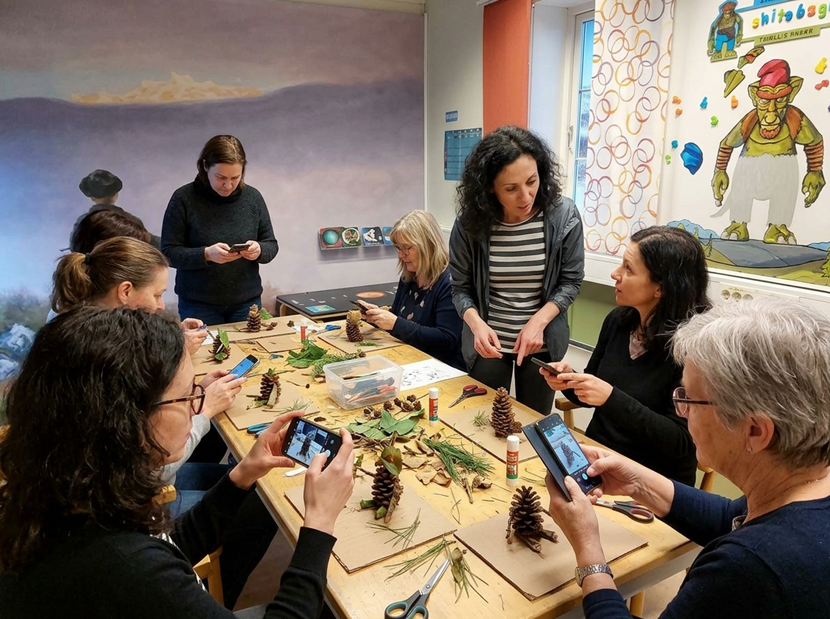
My project, ARctic Folklore: Multilingual Mythologies and Digital Storytelling, explores how Norwegian folklore — particularly stories about trolls and other supernatural beings — can be reinterpreted through contemporary digital storytelling.
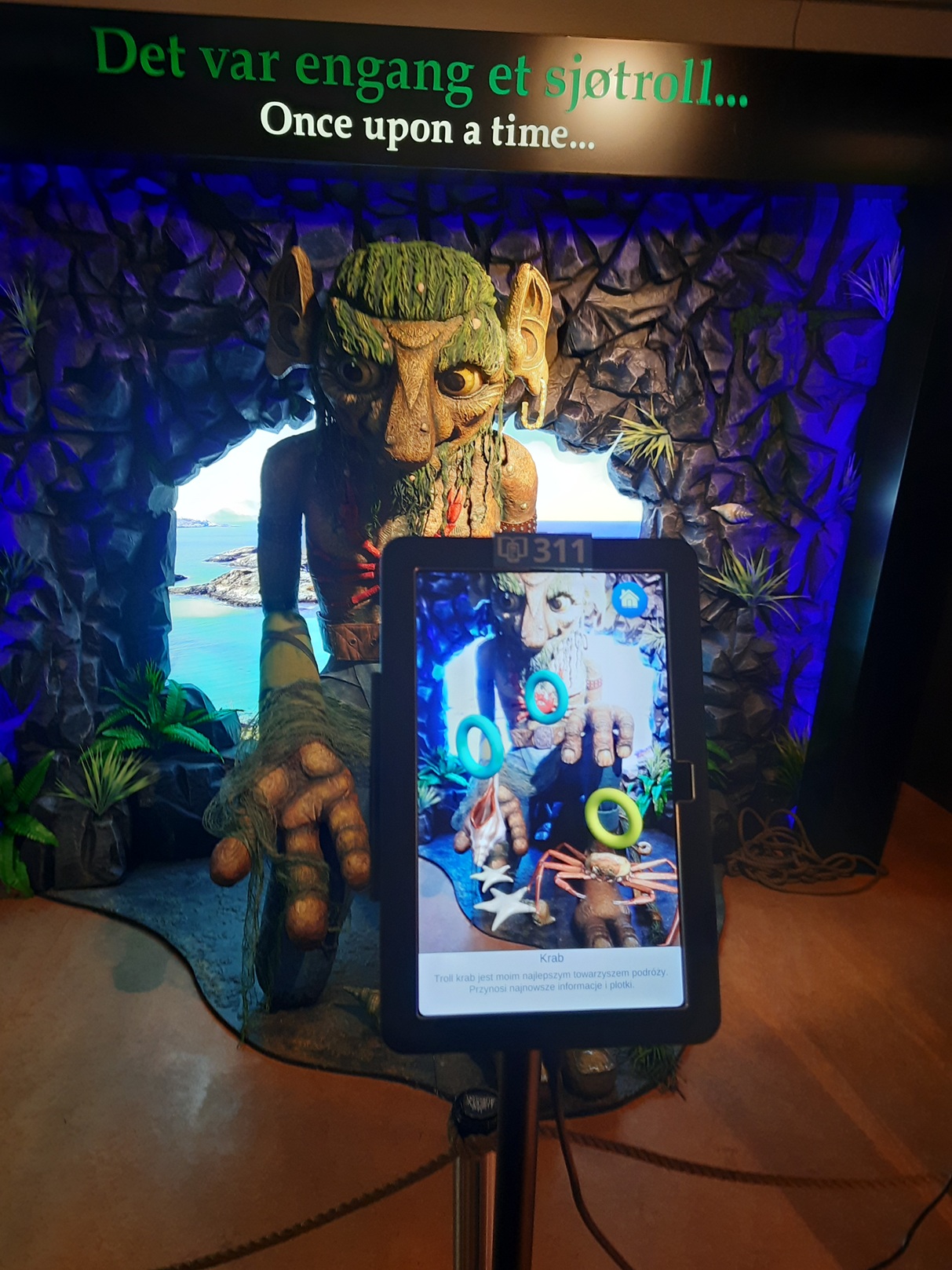
The main partner in this work is the Troll Museum in Tromsø, a museum that combines Norwegian folklore with augmented reality, allowing traditional stories to acquire new visual and interactive dimensions. More details are in my previous post.
But during my research, another group of characters kept appearing: birds.
They were in museum displays, folktales, Sámi cultural references, artworks and public spaces.
They were also in the landscape itself — flying over the harbour, calling from the shore, appearing on murals and, sometimes, occupying the space between the natural and the supernatural.
The Troll Museum traces the development of troll traditions from Norse mythology and Norwegian folk beliefs into the fairy tales that continue to circulate today.
In the museum's interpretation, trolls are often associated with mountains, rocks, forests and the sea — making the landscape itself part of the mythology.
To deepen it, I extended my exploration beyond the Troll Museum to other cultural institutions in Tromsø, including the Arctic Museum, Tromsø City Library and Archive, and the Northern Norwegian Art Museum.
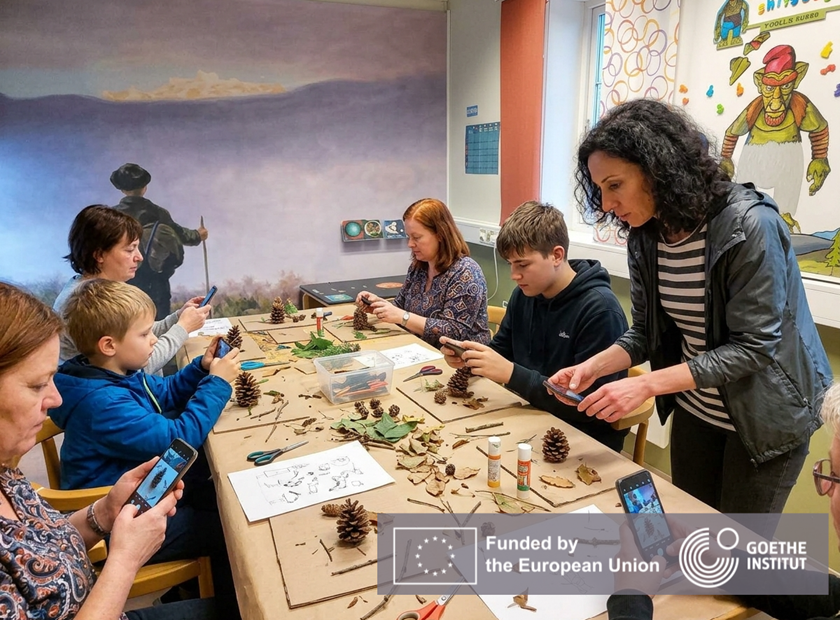
I approached these places not simply as a visitor, but as a creative researcher — sketching, observing, interviewing, writing, making them part of my workshops.
And looking for connections between cultural heritage, wildlife and storytelling.
Below, I share insights into the symbolism of the three most fascinating Arctic birds.
The Troll Bird — Trollfugl
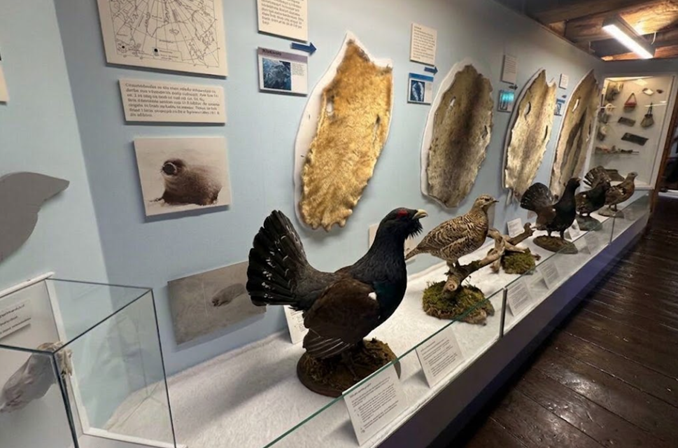
One of the most intriguing discoveries was the Norwegian concept of the trollfugl, literally a "troll bird".
The term is documented in Norwegian folklore and dictionaries as a bird associated with trollskap — supernatural or enchanted qualities.
The capercaillie, or wood grouse (tiur), has particularly strong associations with the idea of the trollfugl. Norwegian cultural sources describe the bird as a creature of the deep forest and, in older folk belief, as belonging to the supernatural world.
This is fascinating because the bird itself already looks almost mythical.
The male capercaillie is enormous compared with many woodland birds.
Its dramatic display, strange calls and sudden appearance from the forest can easily become material for storytelling. In folklore, the boundary between animal and supernatural being therefore becomes blurred.
The trollfugl is not simply a "bird that belongs to trolls". It represents something more interesting: a landscape in which the natural world is not entirely separate from the enchanted one.
The Norwegian artist Theodor Kittelsen — famous for his visual interpretations of trolls and Norwegian folklore — also explored the motif of troll birds.
His 1887 drawing Troll Birds explicitly connects the bird with myths, fairy tales and landscape.
For my project, this is an important discovery.
A bird can become a storytelling technology in itself. The participants of my workshops have had an excellent opportunity to explore that with stop-motion annimation. More details are in my next blog post.
Its behaviour, habitat, sound and appearance can provide the starting point for a myth — and contemporary digital technology can then give that myth another layer of life.
The Cormorants of Utrøst
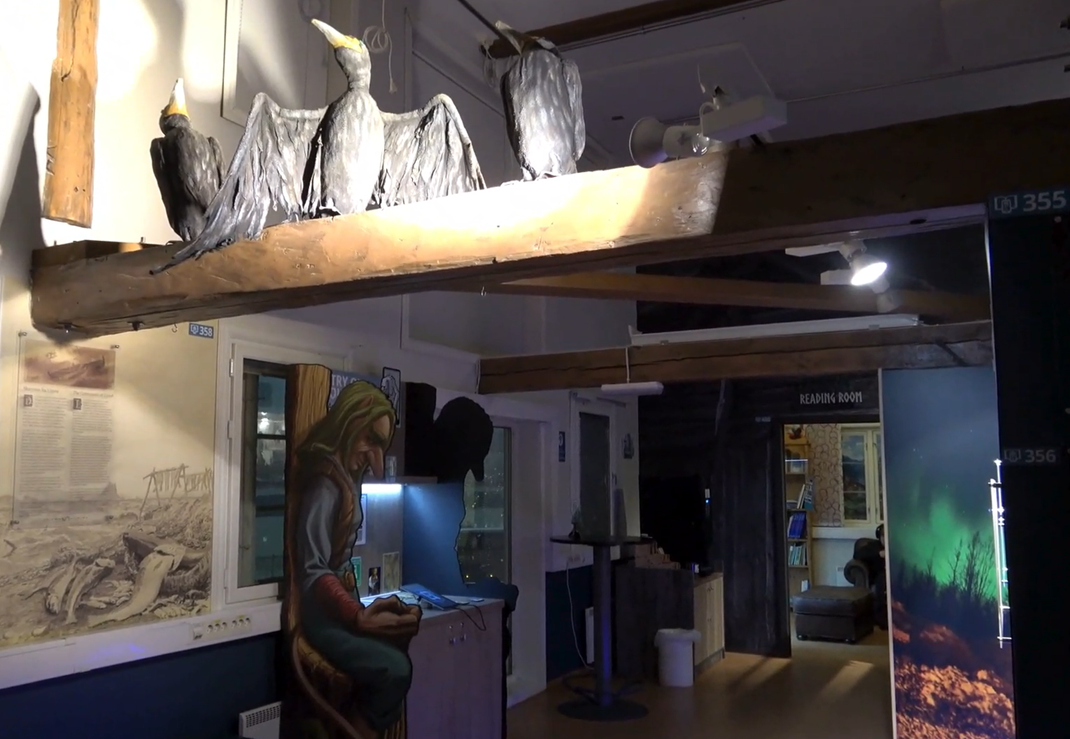
The most powerful bird story I encountered at the Troll Museum was The Cormorants of Utrøst, a famous Northern Norwegian folktale associated with Peter Christen Asbjørnsen and Jørgen Moe.
The museum's cormorant installation immediately caught my attention.
Three dark birds overlook the exhibition space while the sounds of waves and seabirds create an atmosphere of anticipation.
The story takes us far from Tromsø, to the mysterious island of Utrøst, traditionally imagined beyond the outer islands of Lofoten.
Its protagonist is Isak, a poor fisherman caught in a violent storm. At the moment when his situation seems hopeless, he encounters three cormorants.
Instead of being frightened away by the strange birds, Isak takes them into his boat, feeds them and protects them from the cold.
Then Isak falls asleep.
When he wakes, the storm has disappeared. The cormorants are gone, and he finds himself near the mysterious land of Utrøst.
There he meets an old man whose sons are the three cormorants he rescued.
The encounter transforms Isak's fortune. He is welcomed, fed and rewarded, and eventually returns home with an abundance of fish and the promise of prosperity.
The tale has been interpreted as a story in which the cormorants occupy an ambiguous space between the natural and supernatural worlds.
They initially appear frightening and mysterious, yet Isak's kindness towards them becomes the source of his good fortune.
For my project, this is particularly significant: The bird is not merely an illustration of the story. The bird is the story's agent.
It is the creature that crosses the boundary between sea and land, storm and safety, ordinary reality and the hidden world.
That makes the cormorant an ideal subject for experimenting with digital storytelling.
Imagine following its flight through an augmented landscape: from a museum installation to a stormy sea, from the real geography of Northern Norway to the imagined island of Utrøst.
This is exactly the kind of transition between place, myth and technology that ARctic Folklore seeks to investigate.
The Eagle: between the spiritual and the ecological
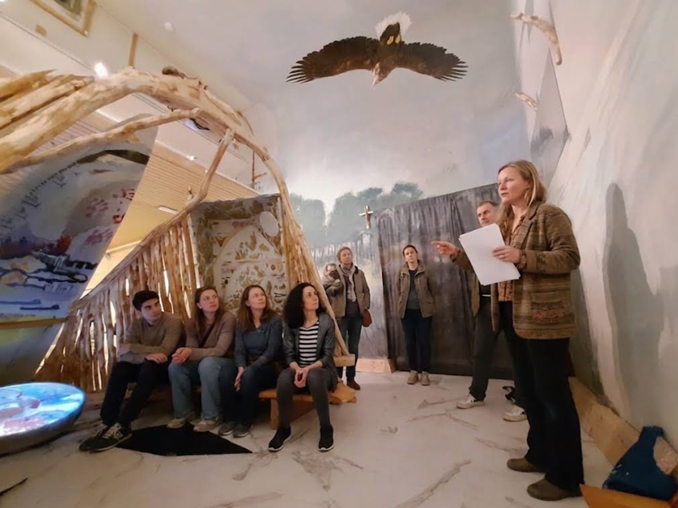
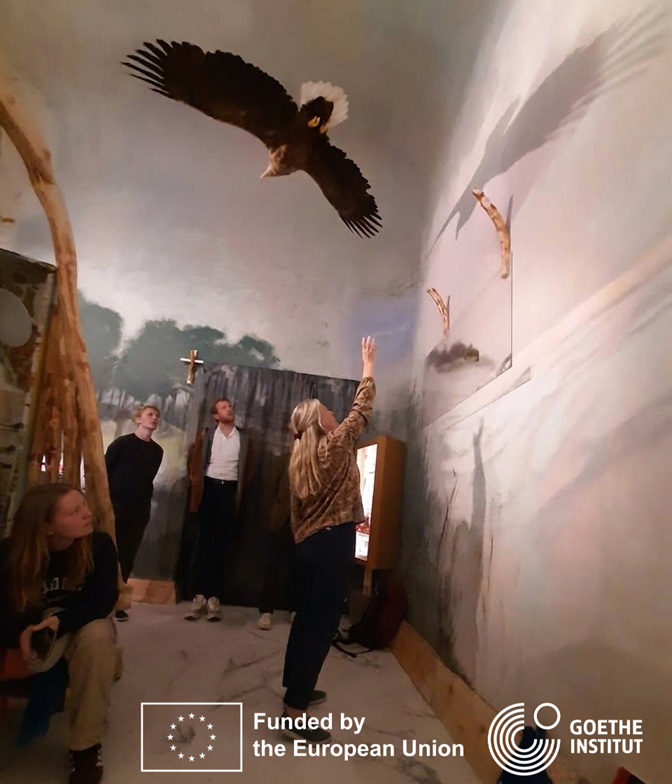
Another important encounter took me into a different cultural landscape: Sámi relationships with the eagle.
Rather than reducing the eagle to a single mythological symbol, I wanted to explore how one bird can occupy several meanings at once — spiritual, cultural, ecological and economic.
In traditional Sámi contexts, birds and other animals can be connected to spiritual practices and relationships with the landscape.
Eagle imagery and bird elements also appear in cultural material associated with spiritual traditions.
At the same time, the eagle belongs to the living Arctic environment, not only to the symbolic one.
For reindeer herders, this creates a very different relationship.
Eagles can prey on vulnerable reindeer calves, meaning that the same bird can be understood simultaneously as a powerful being worthy of respect and as a real ecological presence affecting livelihoods.
This tension is particularly interesting for my project because it challenges the idea that folklore and ecology are separate subjects.
They are not.
The way people tell stories about an animal can influence the way they imagine their relationship with that animal.
And that relationship can change over time.
This is one of the reasons I want ARctic Folklore to move beyond simply "retelling myths". The project asks how stories can help us reconsider our relationship with landscapes, animals and cultural heritage.
Follow my Instagram and Facebook for more stories from Tromsø and the continuing journey of ARctic Folklore: Multilingual Mythologies and Digital Storytelling.