Table of Contents
What Does a Botanical Garden Have to Do with Folklore?
5 Plants to Admire in Tromsø’s Botanic Garden
1. Arctic bell-heather: survive by staying small
2. Saxifrages: grow where it seems impossible
3. Cushion plants: build your own shelter
4. Arctic-alpine primulas: make the most of a short summer
5. The Himalayan blue poppy: an Arctic garden full of global stories
What Does a Botanical Garden Have to Do with Folklore?
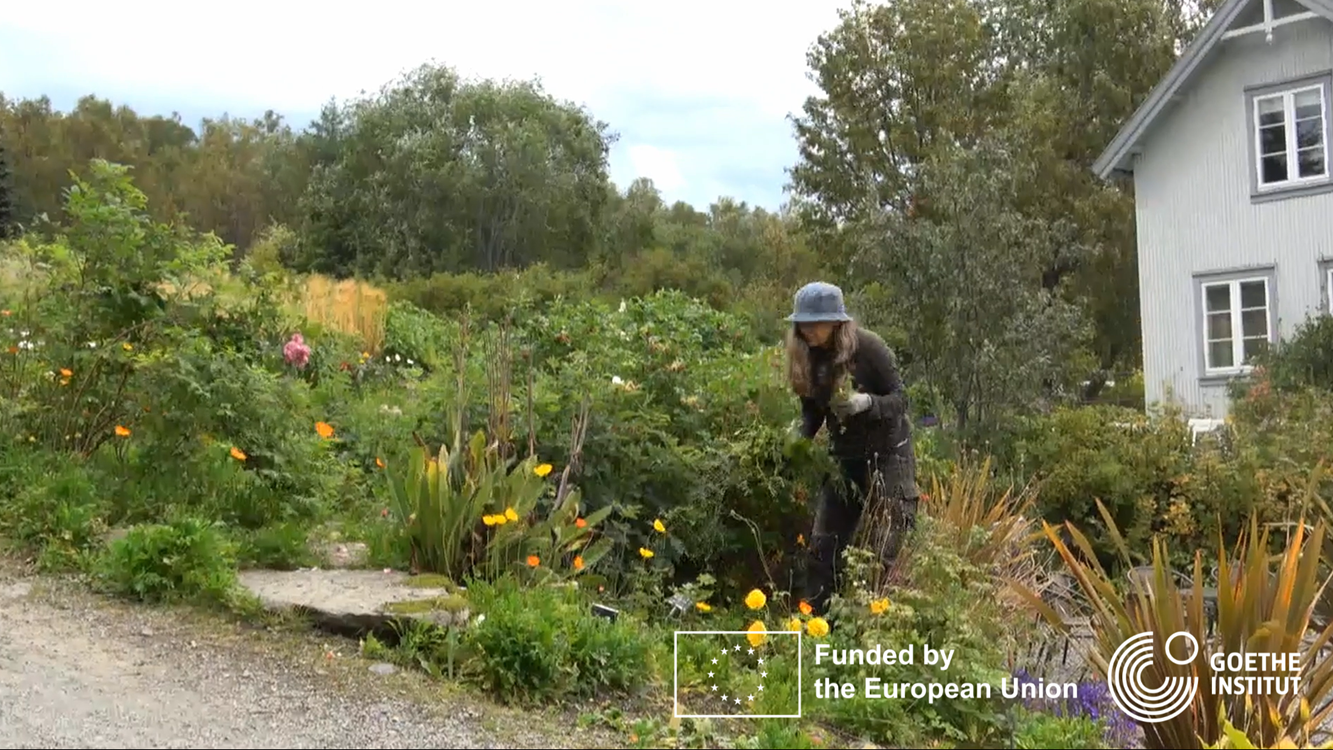
I found myself in Tromsø’s Arctic-Alpine Botanic Garden to prepare for journaling and animation workshops we organise together with Troll Museum Tromsø.
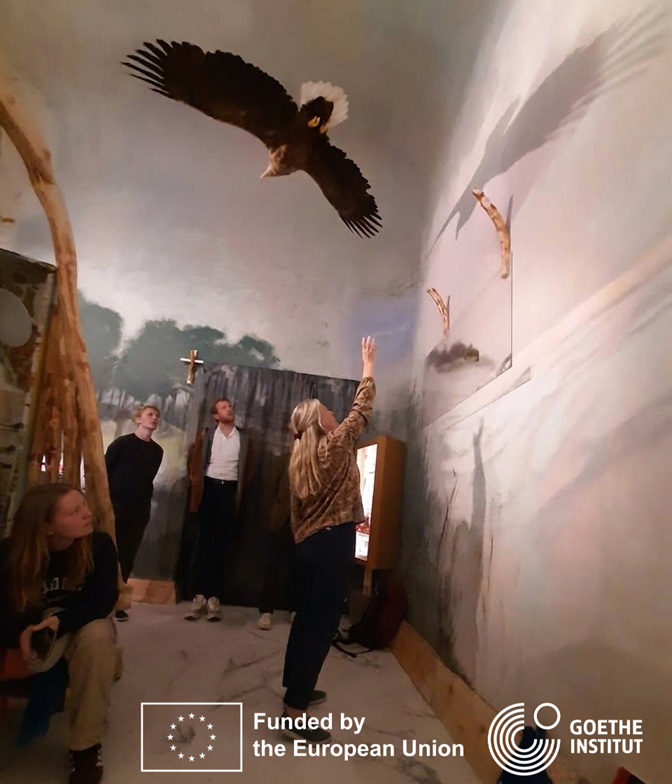
Through the collaboration with the museum, I am exploring how Norwegian troll legends and their connections with local landscapes can be reimagined through augmented reality, digital storytelling, multilingual workshops and creative nature observation.
Explore my previous notes from Tromsø to find practical journaling tips, learn about the most popular Norwegian trolls, and explore the misterious links beetween the symbolism of birds and the environment.
By combining cultural heritage, folklore, sustainable travel, birding and storytelling, the project asks how myth can shape environmental imagination—and how closer attention to nature can deepen our understanding of culture.
At first, a botanical garden might seem like a completely separate subject.
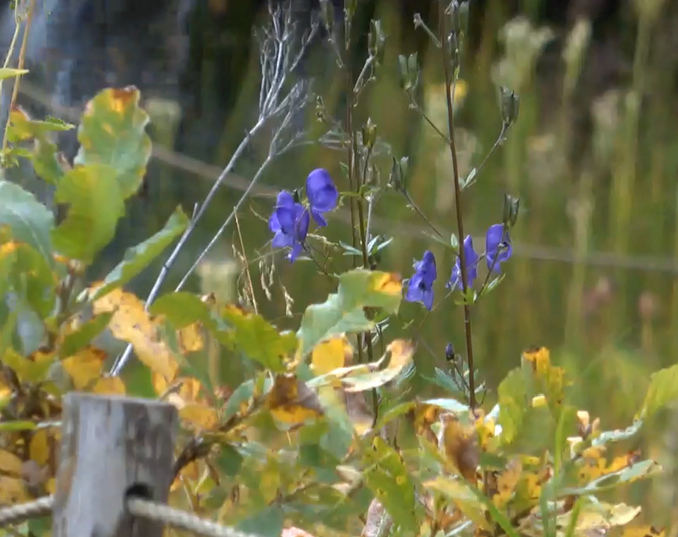
But the more I observe, the more obvious the connection becomes: Norwegian folklore is deeply rooted in landscape.
Mountains, forests, rocks and waterfalls are not simply backgrounds to stories. They help create the imaginative geography in which those stories exist.
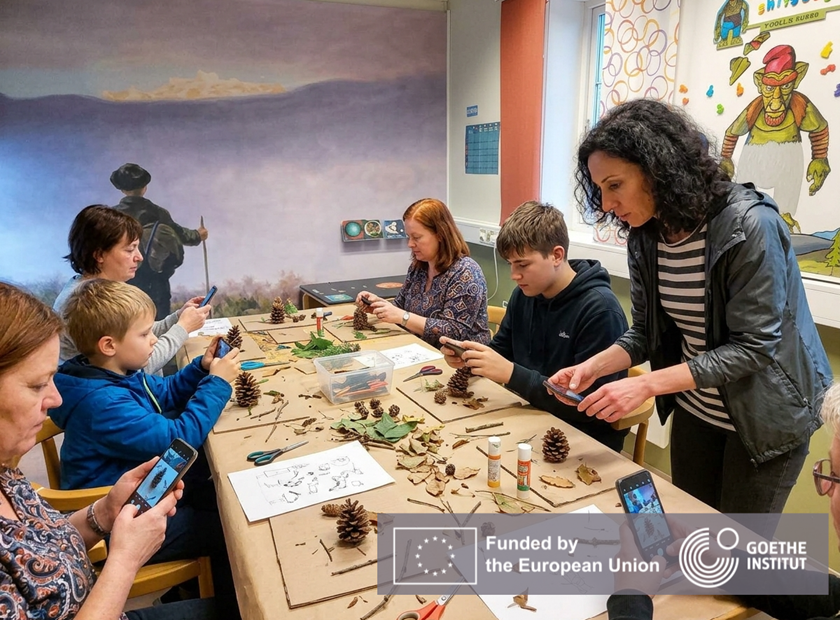
At the garden, I explored how real landscapes, real species and real cultural traditions can inspire responsible new stories. In addition, I picked a lot of fascinating pine cones and made sketches of local plants for my workshops.
5 Plants to Admire in Tromsø’s Botanic Garden
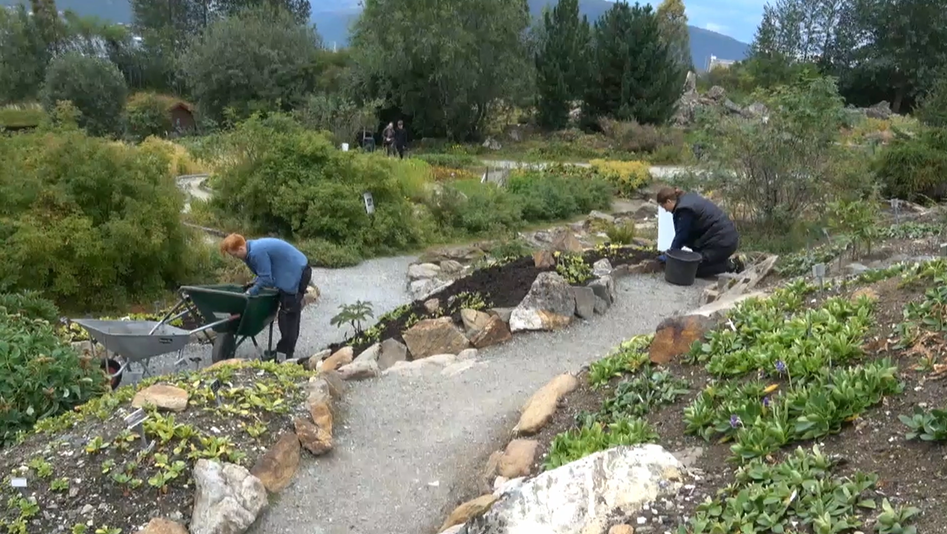
From tiny saxifrages to the famous Himalayan blue poppy, Tromsø’s Arctic-Alpine Botanic Garden is a living lesson in resilience, adaptation—and the stories we tell about nature.
During my creative residency in Tromsø, the Arctic-Alpine Botanic Garden became one of the first places where I began to think about the relationship between nature, storytelling and mythology in a new way.
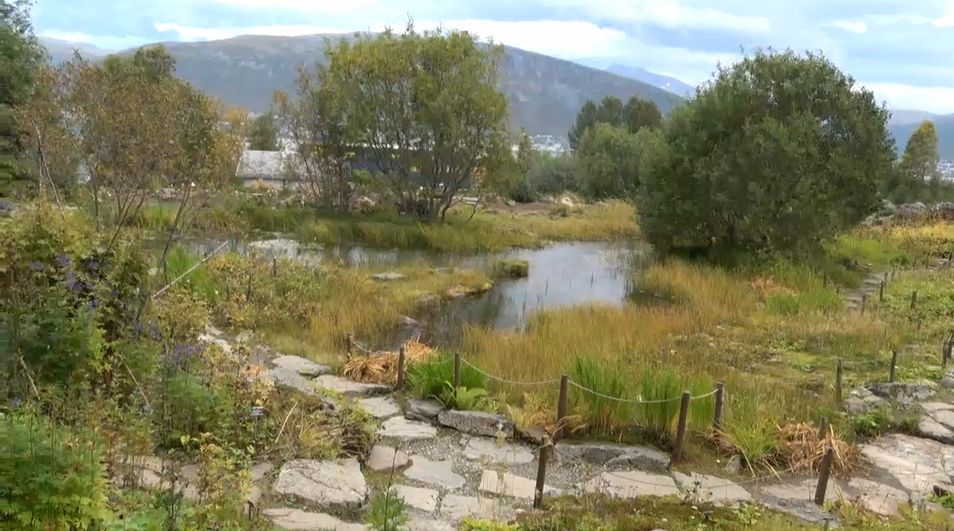
Officially known as the Tromsø Arctic-Alpine Botanic Garden, it is part of UiT The Arctic University of Norway and the Arctic University Museum. It is famous for its collections of Arctic and alpine plants from around the world and is described by UiT as the world's northernmost botanical garden.
With diverse, buzzing groups of curious nature-lovers, the garden is a living classroom: interactive discussions about plant identification, collaborative group photo-projects, hands-on planting experiments, game-based quiz learning.
It brings together plants from the Arctic, Himalayas, Andes and other cold or alpine environments and places them into carefully constructed rock landscapes that imitate aspects of their natural habitats.
With around 25 thematic collections, the garden features a particularly rich collections of saxifrages, primulas and gentians.
And that makes it a wonderful place to practise one of the central ideas of my residency:
notice → investigate → connect → create → share.
So rather than offering another conventional tourist list, I want to ask a different question: What can plants teach us about surviving the Arctic?
Here are five plants—or groups of plants—that offer five different answers.
1. Arctic bell-heather: survive by staying small
One of the first lessons of northern plant life is that small can be powerful.
Arctic and alpine plants often grow close to the ground, where they are less exposed to strong winds and extreme temperature fluctuations.
2. Saxifrages: grow where it seems impossible
If there is a group of plants that could have been designed for an Arctic survival story, it is the saxifrages.
The name Saxifraga is derived from Latin words associated with "breaking rocks", a wonderfully evocative name for plants that are often associated with rocky habitats.
The Tromsø garden has a particularly rich saxifrage collection. Its displays include Arctic and alpine species from different parts of the world, demonstrating how plants from geographically distant mountain environments can share remarkable adaptations.
3. Cushion plants: build your own shelter
Look closely at some Arctic and alpine plants and you may notice a fascinating growth strategy: the cushion.
Instead of producing a tall, exposed structure, many plants grow in compact forms that hug the ground. From a distance, they may look almost insignificant. Up close, they can be extraordinary.
A cushion can create a relatively sheltered micro-environment around the plant. It can reduce exposure to wind and help conserve warmth and moisture.
4. Arctic-alpine primulas: make the most of a short summer
Primulas provide another lesson: when the opportunity comes, be ready.
The Tromsø garden has an extensive primula collection, and its displays are part of what makes the garden particularly interesting for visitors interested in alpine and Arctic flora.
The broader environment around Tromsø makes the growing season a fascinating subject.
5. The Himalayan blue poppy: an Arctic garden full of global stories
And then there is the plant many visitors come specifically to see: the Himalayan blue poppy, Meconopsis.
Its intense blue colour seems almost improbable against the northern landscape.
It is also a perfect symbol of what makes this garden so unusual; it is not simply a collection of Norwegian plants.
It is a place where Arctic and alpine species from different parts of the world can be encountered together.
The garden's collections include major representations from the Himalayas and South America, alongside Arctic flora and plants from other cold regions.
With all that biodiversity, the garden therefore becomes a kind of botanical map.
Find more natural wonders and curiosities from the Arctic on my Instagram.